Product Description
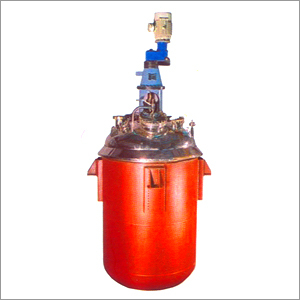
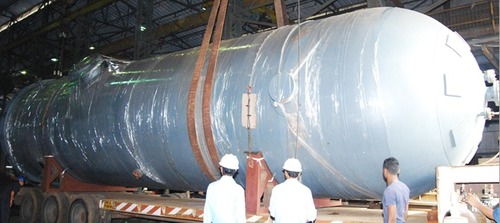
Being an eminent enterprise, we are instrumental in manufacturing and exporting our clients an advance array of Extraction Wash Vessel. These vessels are featured with durable internal filters for ultra high performance in polymer plant. In order to manufacture high quality Extraction Wash Vessel, our professionals employ advanced machines and utilize quality tested material procured from the authentic vendors. To meet the exact requirements of clients, we offer these vessels in various sizes and capacities to opt from.
Features:
- Sturdiness
- Corrosion resistance
- Longer service life
Technical Specification
|
Capacity:
|
50 KL
|
|
Diameter:
|
3430 mm
|
|
Length:
|
3850 mm
|
|
MOC:
|
SS316
|
|
Design Pressure:
|
kg/cm2 6
|
|
Design Temperature:
|
130oC
|
|
Empty Weight:
|
16 Tons
|
Versatile ApplicationThis Extraction Wash Vessel is designed for flexible use across pharmaceutical, chemical, and food industries. Its adaptable configuration allows it to handle diverse extraction and separation tasks, contributing to process efficiency and reliability. Whether used for solvent extraction, washing, or recovery processes, its superior material and finish make it suitable for critical operations.
Customizable EngineeringThe vessels design is fully customizable to client requirements, including dimensions, weight, mounting type, and nozzle positioning. Choices of surface finish, agitator orientations, and heating/cooling options ensure compatibility with different process needs. Utility connections for steam, water, and compressed air expand operational possibilities, while compliance with GMP/ISO/CE guarantees global standards.
FAQs of Extraction Wash Vessel:
Q: How is the Extraction Wash Vessel used in extraction and separation processes?
A: The Extraction Wash Vessel is utilized to facilitate the mixing and separation of compounds through controlled agitation, heating, or cooling. Its design supports efficient washing and extraction of active ingredients from raw materials in pharmaceutical, chemical, or food applications, ensuring purity and yield.
Q: What surface finishes are available and how do they benefit processing?
A: The vessel can be supplied with mirror, matt, or electro-polished finishes. A smoother internal finish (Ra <0.4 microns) minimizes the risk of material adherence and contamination, facilitating easy cleaning, especially vital in hygienic applications like pharmaceuticals and food processing.
Q: When should a top entry or bottom entry agitator be selected?
A: The selection between top and bottom entry agitators depends on process requirements such as mixing intensity, vessel geometry, or product viscosity. Top entry is ideal for general mixing, while bottom entry may be preferred for applications requiring improved solids suspension or lower maintenance.
Q: Where can the vessel be installed and what are the mounting options?
A: The Extraction Wash Vessel can be installed in any production environment with suitable utilities. It is available with mounting on legs for floor-standing arrangements or skirt support for enhanced stability, depending on facility layout and application needs.
Q: What are the advantages of the vessels jacketed or limpet coil heating/cooling provision?
A: Jacketed or limpet coil options allow precise temperature control during extraction and washing operations. This aids in optimizing process conditions, improving extraction efficiency, and protecting sensitive compounds from thermal degradation.
Q: Which certificates are provided and why are they important?
A: Every vessel is manufactured in compliance with GMP, ISO, and CE standards, providing assurance of quality, safety, and regulatory acceptance in domestic and international markets. This is particularly important for pharmaceutical and food industry applications.
Q: How do CIP/SIP provisions enhance the vessels operation?
A: The Cleaning-In-Place (CIP) and Sterilization-In-Place (SIP) provisions allow automated cleaning and sterilization of the internal surfaces, reducing downtime, labor costs, and risk of cross-contamination, which is crucial for batch-to-batch consistency and product safety.








 Send Inquiry
 Send Inquiry
 Send SMS


